
 Back to all case studies
Patient case Study
Navin’s experience switching to CREXONT
Learn what prompted his treatment transition and how it aligned with his lifestyle

Navin’s Diagnostic Journey
Navin was 39 when he first noticed a tremor while playing the violin, and was initially diagnosed with essential tremor. As symptoms progressed, further evaluation by a Movement Disorder Specialist led to a diagnosis of Parkinson’s disease. Navin’s diagnosis at a younger age introduced the challenge of adapting to his condition.

Navin’s Previous Treatment
Navin’s Parkinson’s disease treatment journey started with the following medications:
- Pramipexole, which was later discontinued due to complications
- IR CD/LD
- Istradefylline
Despite multiple therapeutic approaches, finding a regimen that aligned with his daily life and long-term goals remained a challenge.
“It’s about staying active mentally, physically, emotionally.
The moment you panic, you start to go downhill. But if you stay in motion, there’s still so much life to live.”
—Navin
Navin’s Transition to Extended-Release Treatment
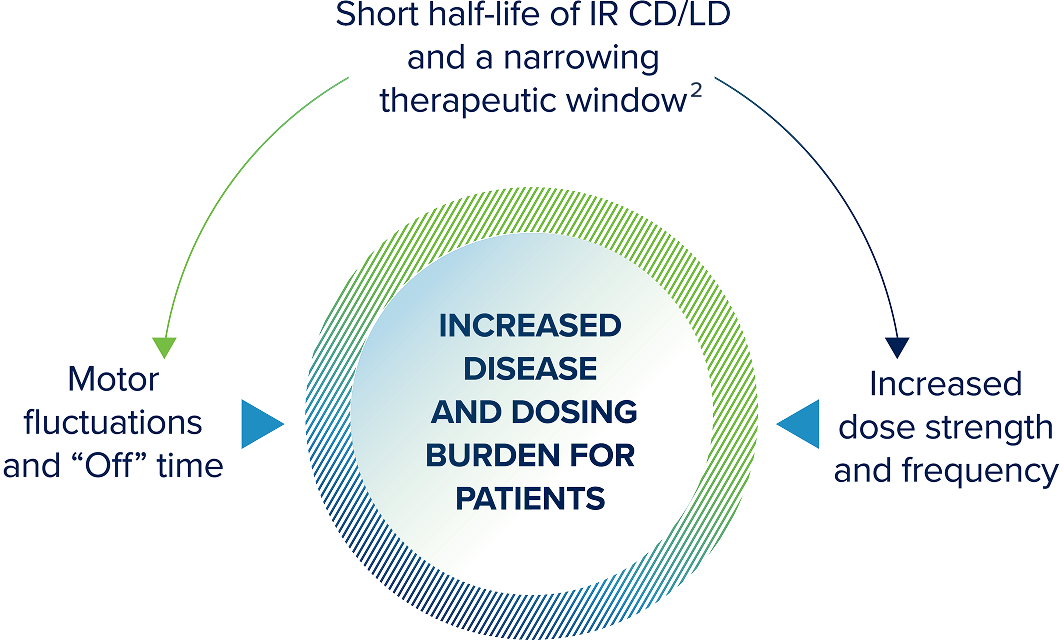
Determined to find a regimen that worked with his lifestyle, Navin switched to taking RYTARY four times daily (two 61.25/245 mg [carbidopa/levodopa] capsules twice daily, and two 48.75/195 mg [carbidopa/levodopa] capsules twice daily). After a while, the dosing frequency became burdensome. So, Navin’s doctor considered CREXONT as a potential alternative due to its reduced dosing schedule.
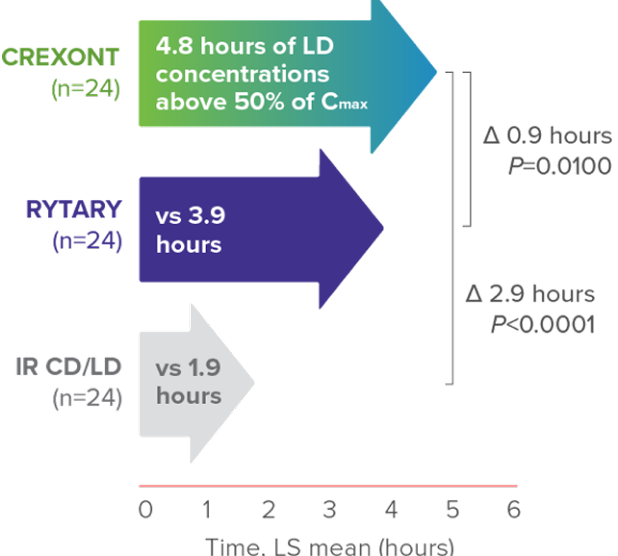
For patients converting to CREXONT from RYTARY (carbidopa and levodopa) extended-release capsules
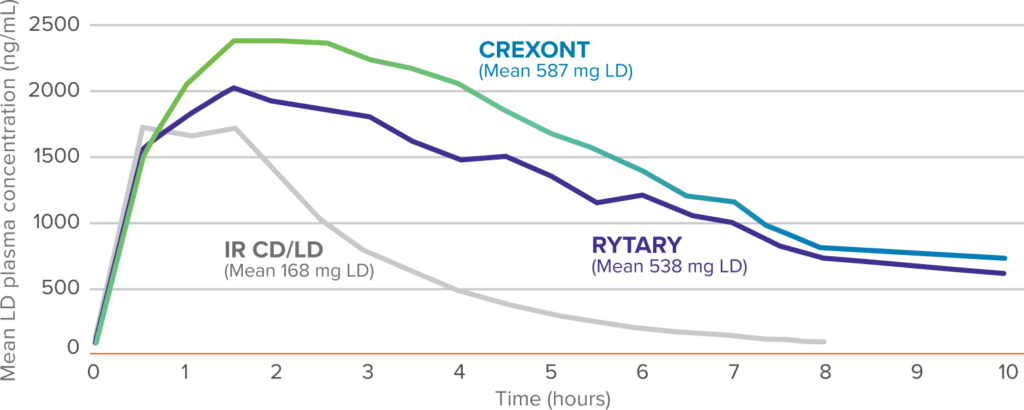
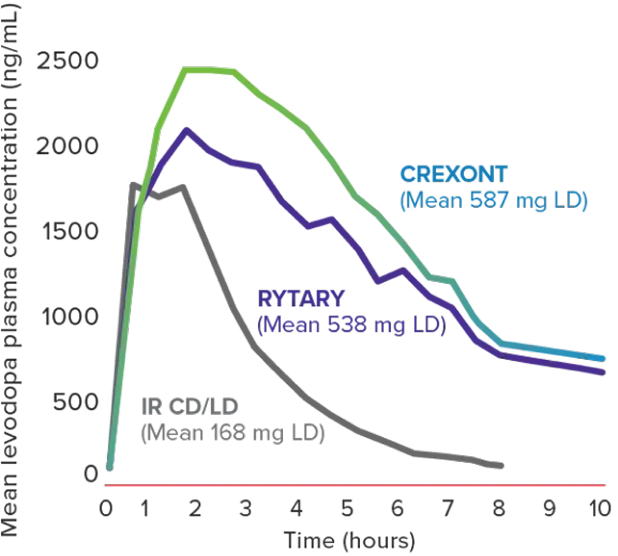
Assessment performed on patients in a fasted and “Off” state.4
No plasma concentration values were available after the 8-hour time point in the IR CD/LD group because all patients in that group had been rescued by then.4
Summary statistics for LD PK parameters are presented by treatment, across all doses of CREXONT, IR CD/LD, and RYTARY, respectively: Cmax (mean ± SD): 3161 ± 1665 ng/mL, 2492 ± 1459 ng/mL, 2839 ± 1909 ng/mL; tmax (median [min–max]): 2.0 h (0.5–7.0); 1.0 h (0.5–2.5); 2.0 h (0.5–6.5); t½ (mean ± SD): 2.3 ± 0.9 h, 1.4 ± 0.3 h, 2.0 ± 0.7 h; AUCt (mean ± SD): 13,291 ± 7264 ng·h/mL, 4879 ± 2631 ng·h/mL, 10,467 ± 6771 ng·h/mL; AUC0–∞ (mean ± SD): 16,734 ± 9759 ng·h/mL, 5456 ± 2896 ng·h/mL, 13,840 ± 8899 ng·h/mL.5
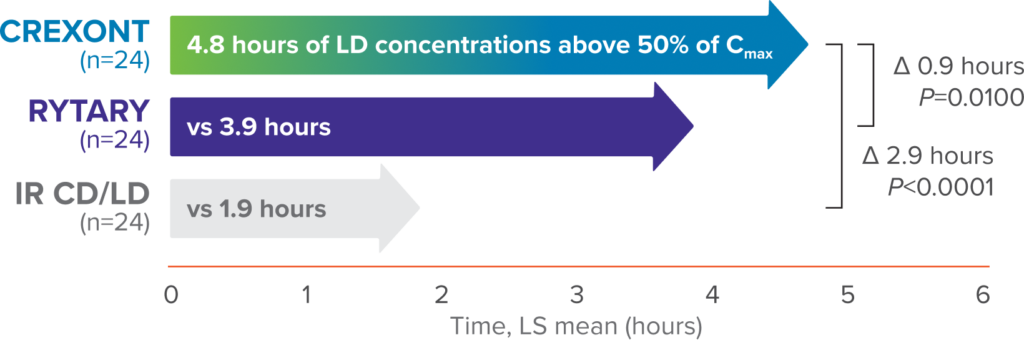
Navin’s Switch to CREXONT1
Navin switched to CREXONT, taking:
- One 87.5 mg/350 mg (carbidopa/levodopa) capsule three times daily
The simplified dosing schedule aligned well with Navin’s routine and lifestyle.
Navin’s experience with CREXONT is his own and may not reflect the experience of every patient. For some patients, CREXONT may cause falling asleep during daily activities. Side effects may include nausea and anxiety. Individual results will vary. Talk to your patients to see if CREXONT is right for them.
The ER technology is designed to7†:
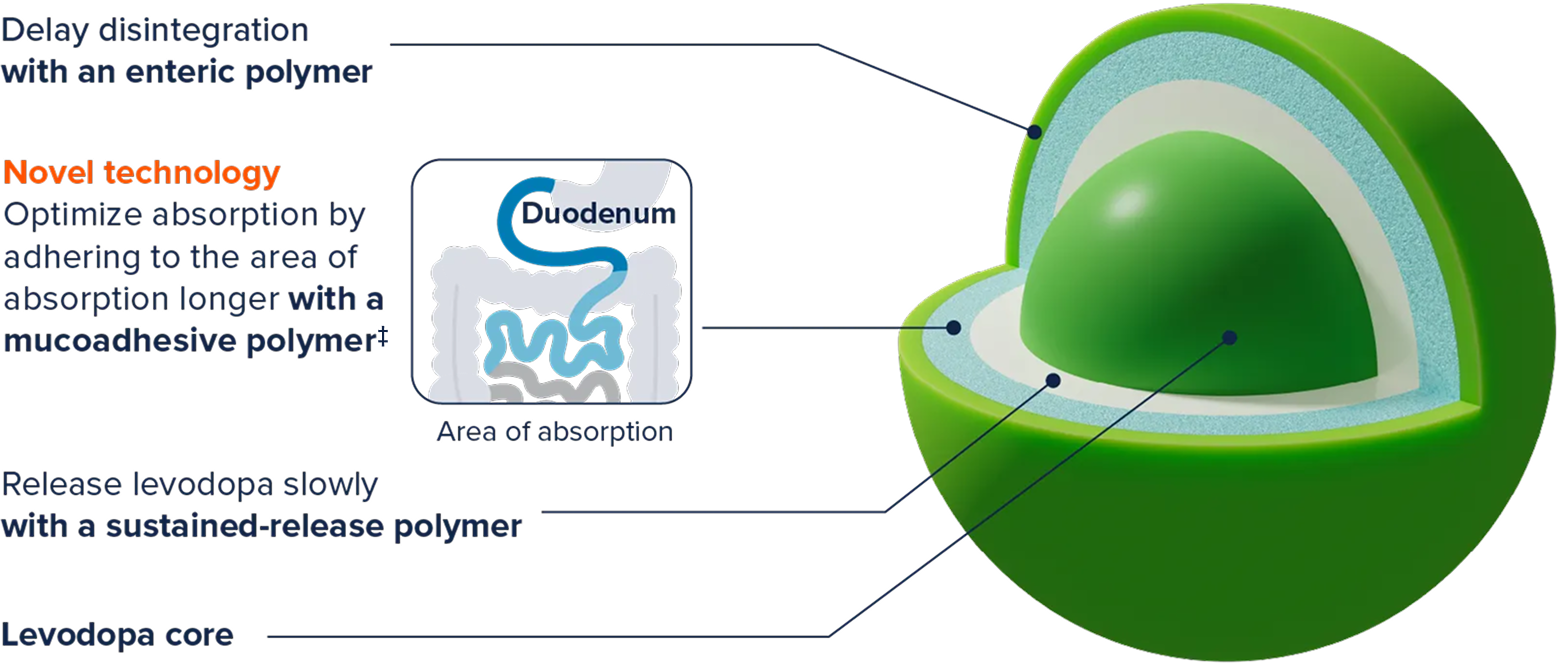
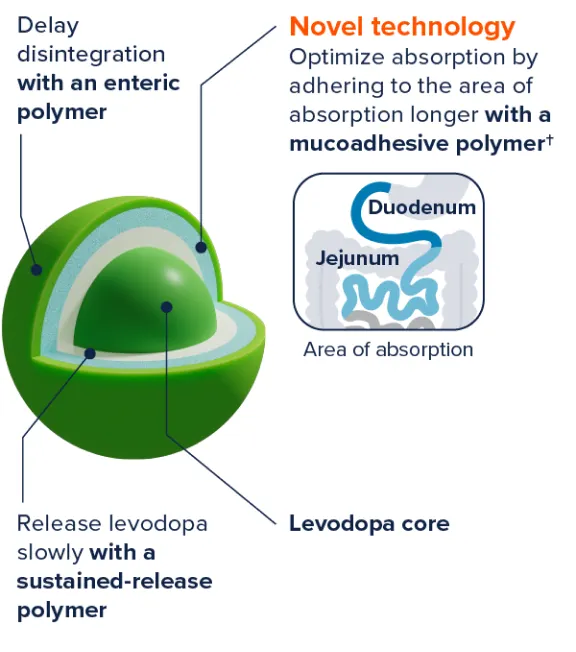
‡Exact site and duration of absorption are unknown.

Use the dosing tool to convert from IR CD/LD to CREXONT
Learn how CREXONT can fit your patients’ needs, and find out how to convert your appropriate patients from IR CD/LD to CREXONT.
Find out about savings programs for your patients
IMPORTANT SAFETY INFORMATION
Indications and Usage
CREXONT® (carbidopa and levodopa) extended-release capsules for oral use is indicated for the treatment of Parkinson’s disease, post-encephalitic parkinsonism, and parkinsonism that may follow carbon monoxide intoxication or manganese intoxication in adults.
Dosage and Administration
- Evaluate vitamin B6 levels before and during treatment with carbidopa/levodopa therapies.
- Levodopa-naïve patients: Starting dose is 35 mg carbidopa/140 mg levodopa taken orally twice daily for the first three days; thereafter, dosage may be increased gradually as needed
- For patients converting to CREXONT from immediate-release carbidopa/levodopa, dosages are not substitutable on a 1:1 basis. See full prescribing information Section 2.2 for instructions
- For patients converting from Rytary® (carbidopa and levodopa) extended-release capsules, initiate CREXONT on an approximately 1:1 mg basis using the levodopa component for conversion
- CREXONT may be taken up to four times daily. The maximum recommended daily dosage is 525 mg carbidopa/2100 mg levodopa
- CREXONT may be taken with or without food. CREXONT capsules should not be chewed, divided or crushed. For patients who have difficulty swallowing, the capsule can be opened and the entire contents can be sprinkled on a small amount of applesauce and consumed immediately without chewing. Patients should not store the drug/food mixture for future use.
- CREXONT should not be taken with alcohol
Contraindications
Nonselective MAO inhibitors.
Warnings and Precautions
- CREXONT may cause falling asleep during activities of daily living, somnolence or dizziness. Patients should avoid activities that require alertness such as driving and operating machinery until they know how CREXONT affects them
- It is important to avoid sudden discontinuation or rapid dose reduction to reduce the risk of withdrawal symptoms such as high fever or confusion. Patients who are discontinuing CREXONT should taper off with healthcare provider guidance
- Consider dose reductions or stopping CREXONT in patients with hallucinations or impulse control disorders (e.g., gambling, sexual urges, or uncontrolled spending)
- Consider dose reduction in patients with dyskinesia
- Treatment with carbidopa/levodopa, including CREXONT, may contribute to reduced vitamin B6 levels. Seizures associated with vitamin B6 deficiency have been reported. Seizures were refractory to traditional anti-seizure medications and were only resolved after vitamin B6 administration. Supplement with vitamin B6 as necessary
- Other symptoms of vitamin B6 deficiency may occur, including depression, confusion, cheilosis, glossitis, dermatitis, anemia, and/or neuropathy. Supplement with vitamin B6 as necessary
- Patients with a major psychotic disorder should not be treated with CREXONT
- Monitor patients with a history of cardiovascular disease for cardiac function
- Monitor patients with a history of peptic ulcer for upper GI hemorrhage
- Monitor patients with glaucoma for increased intraocular pressure
Adverse Reactions
The most common adverse reactions (incidence ≥ 3% and greater than immediate-release CD/LD) are nausea and anxiety.
Drug Interactions
Iron salts and dopamine D2 antagonists, including metoclopramide, may reduce the effectiveness of CREXONT.
Use in Specific Populations
Pregnancy: Based on animal data, CREXONT may cause fetal harm. There are no adequate data on the developmental risk associated with the use of CREXONT in pregnant women.
Breastfeeding: The developmental and health benefits of breastfeeding should be considered along with the mother’s clinical need for CREXONT.
Geriatric patients: There were no differences in safety outcomes between patients less than 65 years of age, 65-75 years of age, or 75 years and older.
To report SUSPECTED ADVERSE REACTIONS, contact Amneal Global Patient Safety at 1‑877‑835‑5472, or FDA at 1‑800‑FDA‑1088 or www.fda.gov/medwatch
Please see full Prescribing Information for CREXONT.
Content is for guidance only. Please use clinical judgment when prescribing CREXONT. Dosage is individualized for each patient.
References: 1. The Michael J. Fox Foundation for Parkinson’s Research. Early-onset Parkinson’s disease. MichaelJFox.org. Accessed February 25, 2026. https://www.michaeljfox.org/news/early-onset-parkinsons-disease 2. Olanow CW, Obeso JA, Stocchi F. Drug Insight: continuous dopaminergic stimulation in the treatment of Parkinson’s disease. Nat Clin Pract Neurol. 2006;2(7):382-392. 3. CREXONT [package insert]. Bridgewater, NJ: Amneal Pharmaceuticals LLC; 2024. 4. Modi NB, Mittur A, Rubens R, Khanna S, Gupta S. Single-dose pharmacokinetics and pharmacodynamics of IPX203 in patients with advanced Parkinson disease: a comparison with immediate-release carbidopa-levodopa and with extended-release carbidopa-levodopa capsules. Clin Neuropharmacol. 2019;42(1):4-8. 5. Impax Laboratories, Inc. IPX203 (Carbidopa-Levodopa) Extended-Release Capsules: Clinical Study Report—IPX203-B14-02 (Synopsis). Published April 5, 2017. 6. Impax Laboratories, LLC. Study IPX203-B14-02: Analysis of Duration With Levodopa Concentration Above 50% of Cmax (PK Population). Clinical study report. Impax Laboratories, LLC; [year not specified]. 7. Hauser RA, Espay AJ, Ellenbogen AL, et al. IPX203 vs immediate-release carbidopa-levodopa for the treatment of motor fluctuations in Parkinson disease: the RISE-PD randomized trial. JAMA Neurol. 2023;80(10):1062-1069.